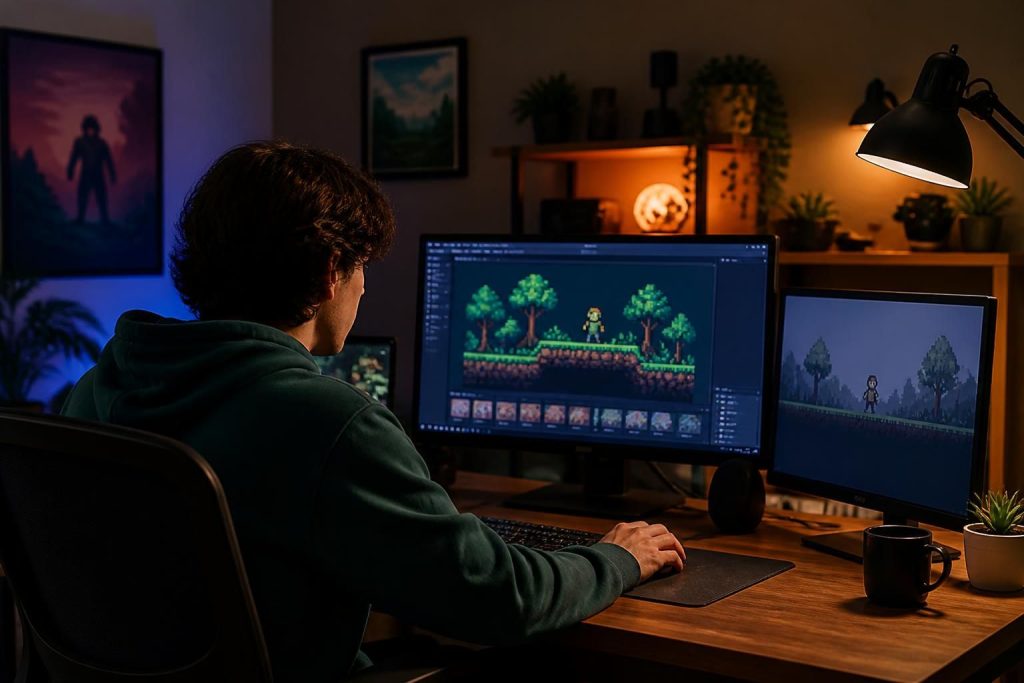
Indie game development has emerged as a vibrant force within the larger gaming industry, fostering innovation and creativity that thrives outside the constraints of major studios. This sector has grown rapidly in recent years, carving out a significant niche in both the indie and mainstream gaming landscapes. By focusing on unique storytelling, diverse gameplay mechanics, and experimental design choices, indie developers are not only challenging the status quo but also shaping the future of gaming culture.
Innovation Through Limitations: The Indie Development Mindset
One of the most notable aspects of indie game development is the way in which constraints can drive creativity. Unlike larger studios that often have considerable budgets and resources, indie developers typically operate with limited financial means and smaller teams. This situation compels them to think outside the box and find innovative solutions to design and development challenges. As a result, many indie games feature unique gameplay mechanics, unconventional narratives, and stylized art that set them apart from mainstream offerings.
A prime example of this creativity is Celeste, a platformer that explores themes of mental health and perseverance. Developed by a small team, the game’s focus on character-driven storytelling and minimalist design highlights the potential for deep emotional engagement, something that often gets sidelined in larger blockbuster titles.
The Rise of Diverse Narratives and Representation
Indie game development has become a key player in promoting diversity within the gaming landscape. Developers in this space are more inclined to explore narratives that reflect a broader spectrum of experiences and identities. This shift is important not only for representation but also for fostering inclusivity in gaming culture.
Games like Spiritfarer and Hades provide players with enriching stories that incorporate diverse characters and cultural backgrounds. These narratives resonate with a growing audience that seeks games capable of addressing complex themes such as grief, identity, and relationships. By prioritizing representation, indie game developers are pushing the gaming industry to become more reflective of its diverse player base.
Community Engagement and Crowdfunding: Fueling Indie Projects
Another significant trend in indie game development is the increasing reliance on community engagement and crowdfunding platforms. Sites like Kickstarter and Indiegogo have empowered developers to bring their ideas to life while fostering a sense of community around their projects. This model not only provides the financial backing necessary to develop games but also creates a built-in audience that feels invested in the end product.
A notable success story is Undertale, which raised over $50,000 through Kickstarter. Its unique retro design and innovative gameplay mechanics quickly garnered a passionate community, leading to critical acclaim and commercial success. The power of community involvement in indie game development underscores the importance of player feedback and engagement, allowing developers to tailor their games to audience preferences. For more on this topic, see สล็อตเว็บตรง.
Technological Advancements: Tools and Platforms for Indie Developers
Advancements in technology have made indie game development more accessible than ever before. With the rise of user-friendly game engines like Unity and Unreal Engine, aspiring developers can create and publish high-quality games without the need for extensive programming knowledge. These tools provide a robust framework, enabling indie developers to focus on the creative aspects of their projects.
Additionally, platforms like Steam and itch.io have simplified the distribution process for indie games, allowing developers to reach a global audience easily. This democratization of game development has led to an explosion of creativity within the indie scene, as developers can experiment with new ideas and concepts without the pressure of meeting major market demands.
Indie Game Development and the Future of Gaming Culture
The influence of indie game development extends far beyond its immediate impacts on the industry. As more players gravitate toward unique and narratively rich experiences, mainstream studios are beginning to take notice. This shift is evident in the growing trend of larger companies partnering with indie developers or even acquiring them to tap into their creative potential.
Furthermore, as players demand greater diversity and representation in their gaming experiences, the success of indie titles is likely to inspire more inclusive practices across the industry. The indie scene is becoming a breeding ground for innovation, setting standards that redefine what games can be and how they can resonate with players on a personal level.
As the gaming landscape continues to evolve, it is evident that indie game development will play a pivotal role in shaping the future of gaming culture. The unique narratives, diverse representation, and innovative gameplay mechanics cultivated in this sector will influence not only independent titles but also the broader industry as a whole.
In conclusion, indie game development showcases the immense potential of creativity and innovation within the gaming world. By embracing diverse narratives, leveraging community support, and utilizing advanced technology, indie developers are crafting experiences that challenge conventional gaming paradigms. As this trend continues to shape the industry, it is clear that indie games will remain a vital force in the ongoing evolution of gaming culture.